
Summer baseball in North America is a world of its own. Long bus rides across state lines, packed stadiums buzzing under warm evening skies, and a constant rhythm of games that leave little room for anything but improvement and endurance. For New Zealand athletes Taichi Nakao and Tait Anderson, this past US summer became a transformative journey, one that pushed them physically, sharpened them mentally, and broadened their view of what it means to compete at a high level.
Though they spent their summers in different leagues and opposite corners of the continent (Nakao in the West Coast League (WCL) with the Edmonton Riverhawks, Anderson in the Appalachian League with the Kingsport Axmen) their stories share striking similarities: unexpected opportunities, moments of self-discovery, intimidating beginnings, and the kind of memories that stay with a player long after the season ends.
Both players’ journeys to their summer teams were shaped by opportunity and by the people willing to open the door for them.
Nakao’s path to Edmonton came through New Zealand connections. “I was first connected with the Riverhawks through Dan Tan, who put me in touch with head coach Jake Lanferman. After one phone call, they were able to send me a contract,” he explained. The experience was so positive that returning for a second summer was an easy decision.
For Anderson, the story is far more unconventional and deeply personal.
His link to the Kingsport Axmen began years earlier at McLeod Park, when the Auckland Tuatara were still competing in the ABL. There, as a young player throwing a baseball around with his brother, he met Ty’Relle Harris, a former pro pitcher and then member of the Sydney Blue Sox. “He came up to me while I was playing catch, started talking, and we just stayed in touch ever since,” Anderson recalled.
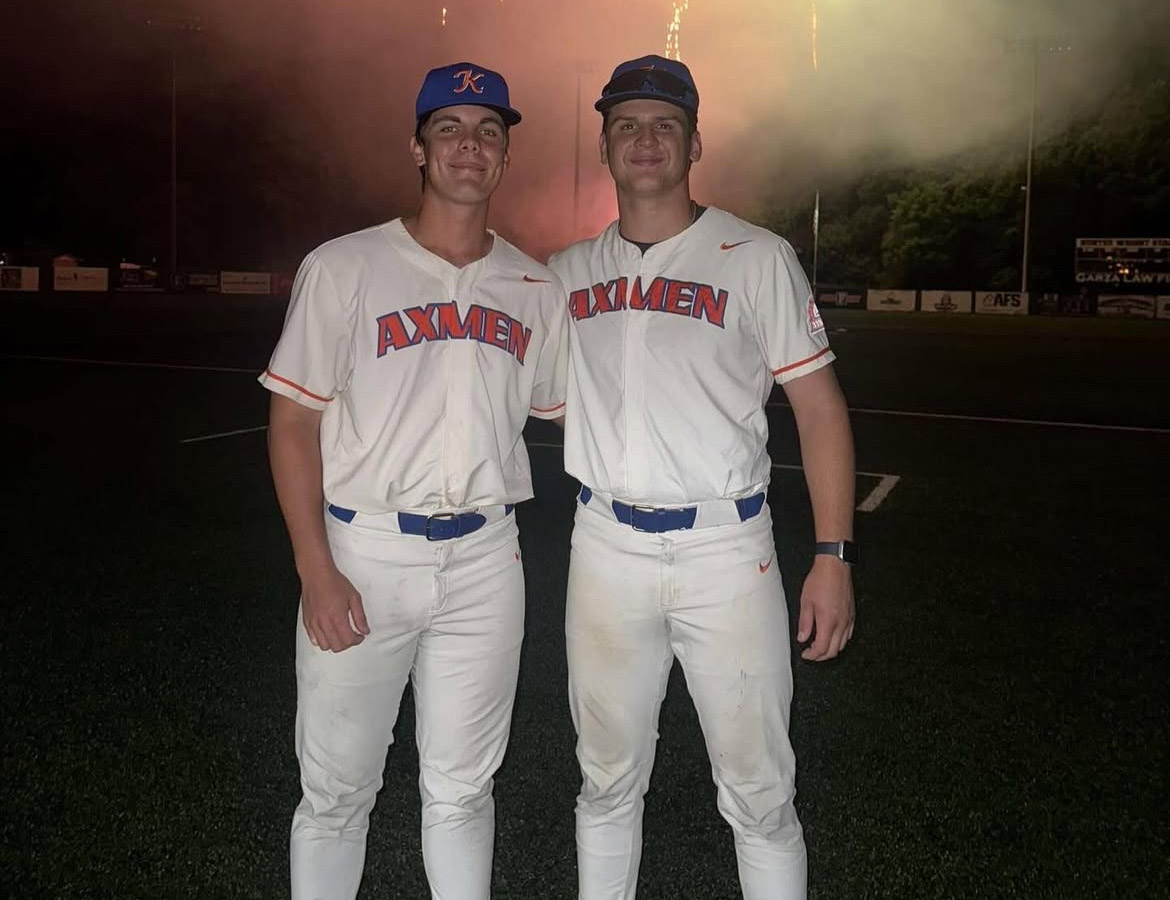
That connection changed his trajectory. Harris, now a first base coach for Kingsport, invited him to live and train together in Tennessee, and eventually pushed for him to join the Axmen.
But even then, the road wasn’t straightforward. Anderson entered the league on a delayed player contract, meaning any team could pick him up. He initially earned a roster spot because some Division I players were still in NCAA postseason play. When they arrived, Anderson was temporarily removed from the roster. Two weeks after that, some players went down with injuries, and he got brought back full-time. From there, he just worked to prove he belonged. It’s a testament to his grit, and to the power of relationships in opening doors abroad.
Knowing little about the league’s history, Anderson soon learned he was stepping into a storied baseball environment. Kingsport’s franchise once served as the rookie affiliate of the New York Mets, formerly known as the Kingsport Mets, a team that produced future stars like Jacob deGrom, Daniel Murphy, and David Wright.
Yet despite different paths, both leagues are known for their elite level of play, attracting top Division I players, emerging prospects, and international talent.
For Taichi, the calibre of pitching in the WCL immediately challenged him. Facing elite arms forced him to adjust his swing and approach, pushing his offensive game to new heights.
For Tait, his first appearance in the Appalachian League was a shock to the system. Tait’s “welcome to the league” moment came in his very first outing—standing on the mound in Pulaski, Virginia, shaking with nerves as he stared down top-tier Division I hitters. Three innings later, with a strikeout under his belt, he realised he belonged.
Seeing teammates from Cincinnati, Maryland, Boston College, Mizzou, and other major programmes drove home the quality of talent around him. “I thought I wasn’t going to be accepted because I was from a small Div I JUCO in Nebraska. But they all made me feel welcome,” he recalled.
Both quickly learned that summer ball is as much a mental test as a physical one.
If there’s one theme that defined both summers, it was the crowds and unforgettable atmospheres.
In Edmonton, Nakao was stunned by the sheer magnitude of fan support. “Playing in front of 9,000 fans was electric and unlike anything I had experienced before,” he said. “Signing autographs after every game and seeing all the young fans made it feel really meaningful.” The energy was so impactful that he returned for a second season, drawn back by what he called an environment that was “both enjoyable and pushed me to elevate my game.”
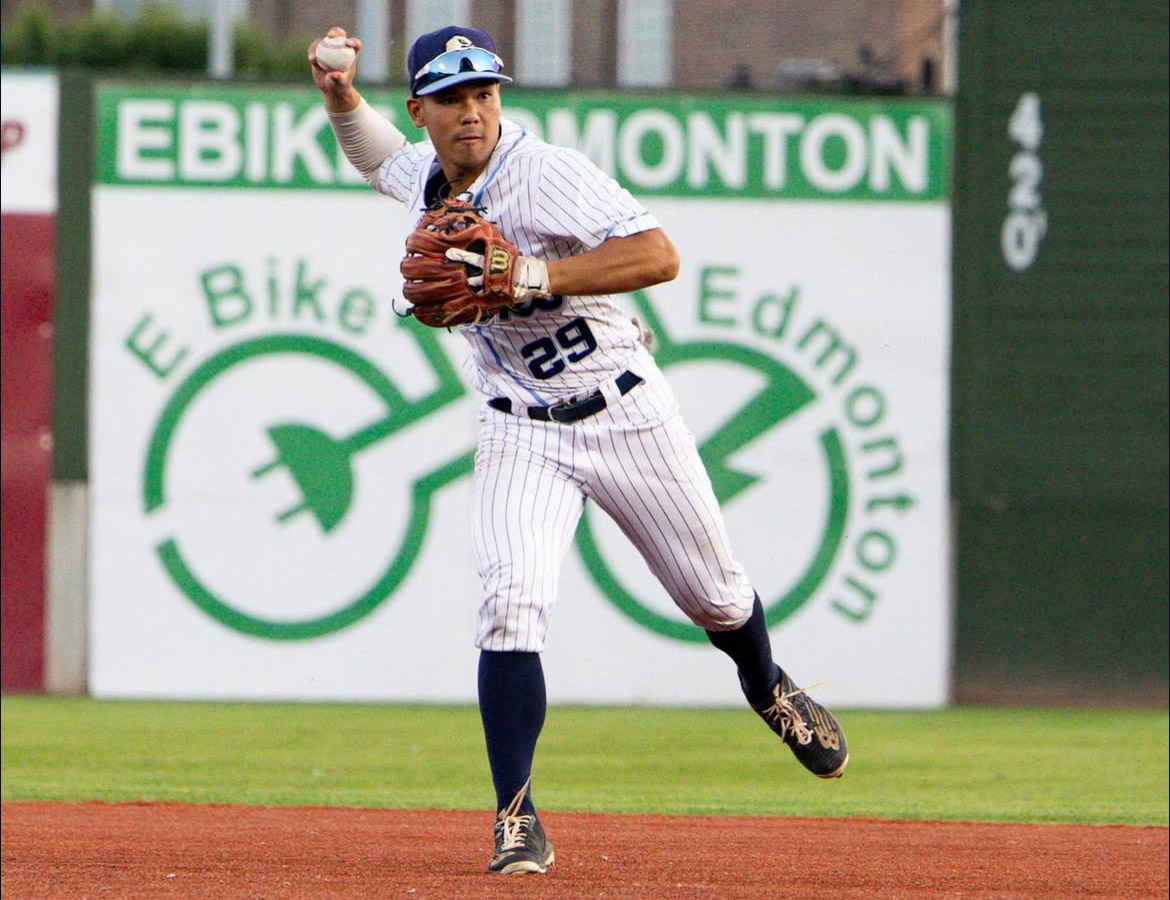
He also carries one unforgettable baseball memory: “If I had to choose a moment that I’m proud of, it would be our playoff win against Bellingham in my first year. It was the first playoff win in Edmonton Riverhawks history. It was pretty cool to be part of that.”
Meanwhile, Anderson’s defining moment came during Kingsport’s semi-final. “It was a packed-out crowd at home against Greenville, and we won in a comeback,” he said. “It was an electric atmosphere to be part of.” Moments like that reminded him why he embraced the grind of summer ball—six games a week, constant travel, and competition that demanded his best.
The summer schedule hardened both players and transformed the way they approached development.
For Nakao, the biggest lesson was learning to take care of himself. “Playing 5 or 6 games a week is tough on the body,” he said. “I learned that proper rest, recovery, and mental breaks were important for me to perform at my best.” Travel across the Pacific Northwest taught him discipline and patience which are lessons he now carries into his next step at the University of California at Berkeley (Cal).
Anderson found his biggest improvement in precision and conviction. “I learned to play proper catch,” he said. “I didn’t throw the hardest, but my coaches told me throw my pitches with conviction, and it worked. I didn’t walk a single hitter all summer and I was blowing 84mph by DI hitters.” One of his biggest highlights came when he earned his first Appalachian League win, becoming the first New Zealander ever to do so.
These weren’t just physical gains; they were shifts in mindset. Nakao notes, “My biggest takeaway is to trust the process and be patient.” Anderson echoes the same growth, saying, “You do the same thing every day, but it’s a lot of fun!”
What both players speak about most fondly isn’t the stats, the wins, or even the electricity of the crowds. It’s the relationships.
For Nakao, it was the sense of belonging created by teammates and coaches. “Being surrounded by high-level players and an awesome coaching staff created an environment that pushed me to elevate my game,” he said.
Anderson felt the same in Kingsport. Despite starting the summer nervous and unsure if he’d fit in, he found himself embraced by teammates from powerhouse programmes. “They all made me feel welcomed,” he said. “I made so many connections with players and coaches that will last a lifetime.”
Both players also stressed the joy of interacting with young fans. Anderson relished giving away signed baseballs and creating memories for kids in the stands. Nakao felt the same, saying the Riverhawks’ fan base “made my summers in Edmonton memorable and enjoyable.”
Now back at their college programmes, both players credit summer ball for preparing them for what’s next.
Nakao now enters the Atlantic Coast Conference (ACC) at Cal with a sharpened swing and a refined approach. “My goal this fall is to make an immediate impact and earn a starting spot,” he said.
For Anderson, confidence is the biggest thing he’s carrying forward. “Stepping into a locker room full of top players was overwhelming at first,” he said. “But now I know I can compete with anyone.”
Both Nakao and Anderson hope more New Zealand players take the leap overseas. Nakao encourages players to initiate their own opportunities: “Be proactive. Reach out to coaches, former teammates—anyone who can help. Building connections can open doors to some very cool places.”
Tait believes the rewards far outweigh the nerves: “Summer ball is the best experience you’ll have. Take every day to get better, enjoy the grind, and make connections that last a lifetime.”
Despite playing in different leagues, in different countries, under different circumstances, both athletes came away with the same core realisation: summer ball isn’t just baseball, it’s an opportunity to grow as a player, teammate, and person.
From packed stadiums in Edmonton to historic ballparks in Tennessee, Taichi Nakao and Tait Anderson proved that New Zealanders cannot only compete in North America’s top summer leagues, they can thrive.
Their advice to the next group of Kiwi athletes dreaming of following them?
Take the chance. Do the work. Trust the process. And let summer ball take you somewhere unforgettable.
Article by: Marina Lough (Baseball New Zealand).